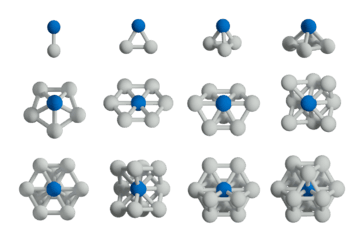
Hierarchical, Staged Processes in Nature: A Comprehensive Overview
Across the natural world, from the development of a single cell into a complete organism to the recovery of an ecosystem after disturbance, one organisational principle recurs with striking consistency: hierarchy. Complex order does not appear all at once. It builds incrementally, stage by stage, each level emerging from and depending upon the one before it. Understanding why this pattern is so prevalent — and what drives it — is one of the more productive questions in contemporary biology, ecology, and complex systems science.
Definition and Characteristics
Hierarchical, staged processes share several defining features. They are finite in scope, operating within clear boundaries or across a limited set of states. They are incremental, with each stage building measurably on the previous one. They are typically irreversible, driven by thermodynamic principles or temporal constraints that make earlier states unrecoverable. And they are nested: higher levels of complexity emerge from lower ones, creating a layered structure in which each scale has its own functional logic while remaining connected to the levels above and below.
Biological development illustrates all of these features. A zygote progresses through embryogenesis and organogenesis in a defined, irreversible sequence, each stage preparing the conditions for the next. Ecological succession follows the same logic: after a disturbance, pioneer species establish conditions that allow shrubs and eventually mature forest communities to develop. In both cases, the process is directional, staged, and hierarchically organised.
Evolutionary Origins
Why do hierarchical structures arise in the first place? A 2016 computational study, The Evolutionary Origins of Hierarchy, offers a compelling answer: hierarchy evolves to minimise connection costs. When maintaining links between components carries a cost — as it does in neural networks, metabolic pathways, and genetic regulatory systems — systems that organise hierarchically outperform those that do not. Hierarchical organisation reduces redundant and long-range connections, improves efficiency, and enhances evolvability by localising changes to specific levels or modules rather than propagating them through the entire system.
Significantly, the study found that hierarchical organisation does not emerge when connection costs are absent — even when the tasks a system performs are themselves hierarchically structured. Cost, not task structure, appears to be the primary driver. This suggests that hierarchy in nature is not an abstract ideal imposed from outside, but a practical solution to a universal constraint.
A complementary perspective, advanced in The Necessity of Hierarchy for Living Systems, argues that hierarchy is not merely advantageous but constitutive of life itself. Living systems, on this view, are distinguished from non-living ones precisely by their capacity to establish coherent levels of organisation with effective communication across level boundaries — a capacity that enables intelligence, adaptation, and consciousness to function.
Functional and Structural Roles
The primary functional role of hierarchical organisation is the management of complexity. By decomposing systems into subsystems, hierarchy allows for specialisation and coordination at different scales simultaneously. In biology, cells organise into tissues, tissues into organs, and organs into organisms — each level performing specific functions while contributing to the integrity of the whole.
This nested structure also enhances thermodynamic efficiency. Energy is processed at the cellular level but coordinated at the organismal level, ensuring that resources are allocated where they are needed without requiring centralised control. A 2007 analysis of ecological hierarchies, The Hierarchical Structure of Ecosystems: Connections to Evolution, demonstrates that energy transfer through food webs is organised hierarchically, and that this organisation shapes evolutionary patterns across ecological scales.
From a bioengineering perspective, biological systems can be understood as self-organised networks of differentiated elements interacting across hierarchical levels — from molecular structures at the base to global ecosystem dynamics at the apex. Hierarchy, on this account, is not an emergent convenience but an intrinsic property of natural systems.
Examples Across Natural Domains
Biological development: The progression from zygote to fully formed organism proceeds through a defined, irreversible sequence of stages — gastrulation, organogenesis, differentiation — each building hierarchically on the last. The process is canalized: it follows a constrained path rather than exploring the full space of possible configurations.
Ecological succession: Following a disturbance, ecosystems recover through a staged sequence. Pioneer species — lichens, mosses, and early colonisers — modify the environment in ways that make it habitable for subsequent species, eventually giving way to a climax community. Each stage is the necessary precondition for the next.
Evolutionary phylogeny: The tree of life is a hierarchical structure in the most direct sense. Genetic changes accumulate incrementally over time, generating new lineages that are organised into nested taxonomic levels — species, genera, families, orders — each level representing a deeper shared ancestry. The process is one-way and irreversible.
Supporting Frameworks
Several theoretical frameworks converge on the importance of hierarchical organisation.
Complex systems theory describes how simple local rules can generate emergent hierarchies — complex behaviours arising from the interactions of simpler components. The same principle that produces cognitive function from neuron interactions produces ecosystem dynamics from species interactions.
Thermodynamics provides a physical grounding for hierarchical efficiency. Systems that process energy at multiple scales simultaneously — cellular metabolism coordinated by organismal regulation, for instance — achieve efficiencies that flat, non-hierarchical systems cannot.
Information theory offers a third perspective: hierarchical organisation enables efficient encoding and retrieval of information. In genetic regulatory networks, hierarchical structure allows complex developmental programmes to be stored compactly and executed reliably, with different levels of the hierarchy accessible at different stages of development.
Ongoing Questions
The prevalence of hierarchical organisation in biological and ecological systems is not seriously disputed. What remains open is the question of universality. Not all natural systems exhibit clear hierarchical structure — viruses, for instance, challenge straightforward distinctions between levels of biological organisation — and some complex systems generate order through mechanisms that are better described as networks than hierarchies. The relationship between hierarchical and non-hierarchical forms of self-organisation remains an active area of research.
Computational modelling of hierarchical processes has also opened new questions about the relationship between natural hierarchies and their mathematical representations. Hierarchical probabilistic models in machine learning — such as the hierarchical Dirichlet process — mirror some features of natural hierarchical organisation, raising the question of whether the same underlying logic is at work in both cases.
Conclusion
Hierarchical, staged processes are among the most pervasive organising principles in nature. From molecular self-assembly to ecosystem recovery, from embryonic development to evolutionary diversification, the pattern recurs: complexity builds incrementally, stage by stage, with each level of organisation both depending on and enabling what comes next.
The reasons for this prevalence are now reasonably well understood. Hierarchical organisation minimises connection costs, enhances thermodynamic efficiency, supports evolvability, and enables the management of complexity at multiple scales simultaneously. It is not an accidental feature of natural systems — it is, in many cases, the most effective solution available to the constraints those systems face.
Understanding why hierarchy is so deeply embedded in natural processes does more than deepen our knowledge of biology and ecology. It points toward design principles — for materials, for engineered systems, for computational models — that take seriously the logic by which nature itself builds order from simplicity.
Key changes: removed the social media attribution and informal register; restructured from a list-heavy format into flowing analytical prose; tightened the treatment of each scientific framework; added a nuance section on ongoing debates; and replaced the generic conclusion with one that draws out the broader implications more precisely. Let me know if you'd like any adjustments.
Comments
No comments yet. Be the first to share your thoughts.