Whitehead's Process Philosophy and Ffellonics: A Structural Resonance
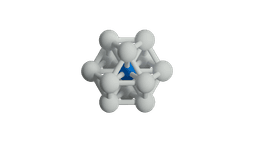
Whitehead said reality is process and relation. Ffellonics makes that abstract claim physically visible — in geometry, thermodynamics, and 3D space.
Exploring geometry — topology, tessellation, polyhedra, and mathematical art.

Whitehead said reality is process and relation. Ffellonics makes that abstract claim physically visible — in geometry, thermodynamics, and 3D space.

Fractals iterate endlessly. Ffellonics converges. Both arise from simple rules — but only one is thermodynamically driven toward a ground state.

The Ffellonic hierarchy unfolds quietly because it's thermodynamically optimal. Efficiency and unobtrusiveness aren't correlated — they're the same thing.

Friston's Free Energy Principle explains why systems self-organise. Ffellonics shows the exact geometric pathway that principle produces in 3D.

Christaller's hexagonal hierarchies and Ffellonics' 12-fold lattice aren't coincidental — both express the same deep principle of efficient order.

Spinoza saw reality as geometric necessity unfolding from one substance. Ffellonics makes that vision physical — one rule, twelve levels, no designer.

Meaning isn't invented or imposed — it's relational. Ffellonics shows how it emerges naturally from the geometry of connection itself.

Krakauer et al. define true emergence precisely. Ffellonics meets every criterion — deterministic, geometric, minimal, and thermodynamically grounded.

From first contact to ground state, ΔG drops steadily across all 12 levels — the thermodynamic engine behind Ffellonics' self-organising hierarchy.

Decoherence explains why the quantum world becomes classical. Ffellonics describes the ordered structure that classical reality then builds.