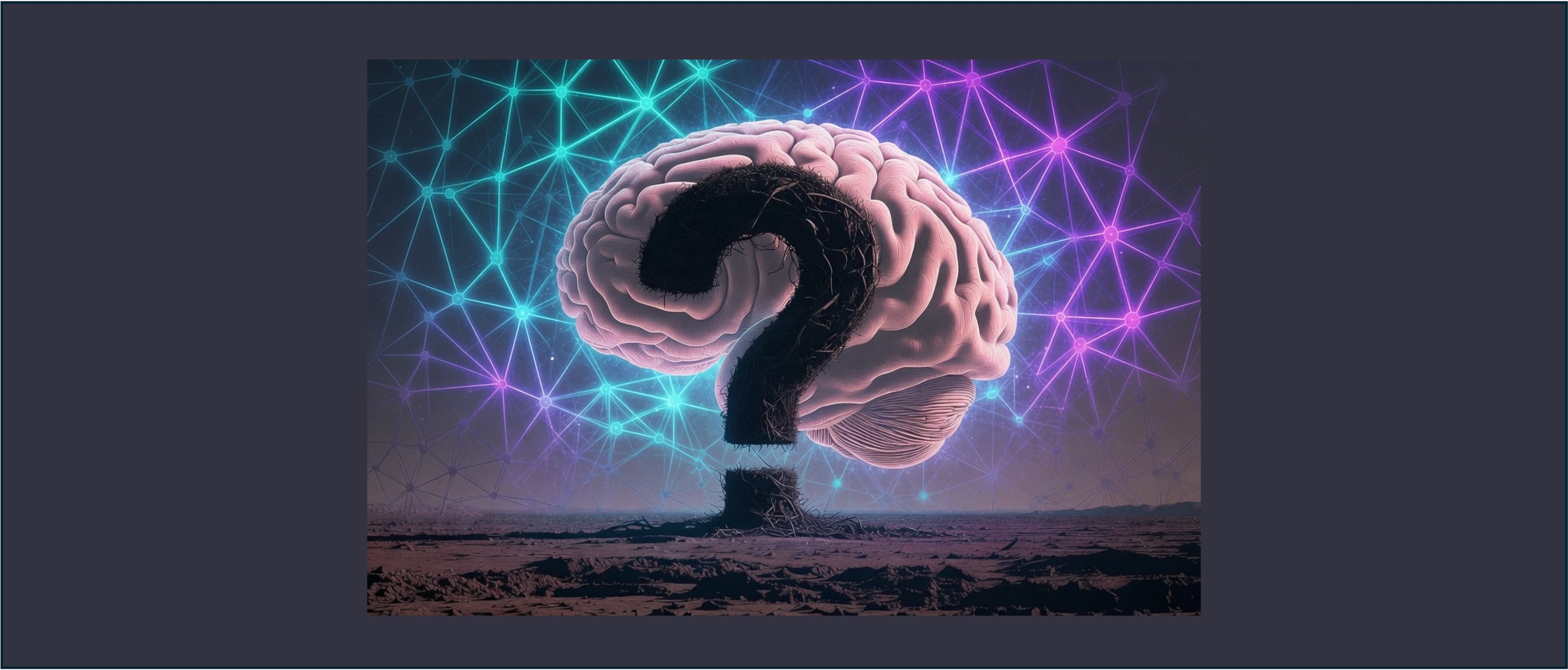
The Geometry of Curiosity, Relational Self-Assembly, and the Emergence of Consciousness in Ffellonics
In an age of rapid technological change and deepening questions about the nature of mind, two forces stand out as profoundly intertwined: curiosity and consciousness. What drives us to explore the unknown? How does subjective experience arise from the physical world? A compelling new geometric framework called Ffellonics offers a fresh lens—one that suggests consciousness is not an inexplicable add-on to matter but the natural outcome of relational self-assembly, with curiosity acting as its vital propellant.
What Is Ffellonics?
Ffellonics (also known as Fellonic geometry) is a minimalist, universal geometric model centred on relational emergence. It proposes that reality begins the moment relation begins. Identical units—conceptually modelled as spheres in a state of pure potential—follow one simple local rule upon contact: symmetric nearest-neighbour attachment that maximizes contacts while minimizing free energy (or internal stress).
From this single rule emerges a lawful 12-level hierarchy of increasing order:
• Early levels involve basic contacts (dyads, triangles, tetrahedra).
• Mid-levels build Platonic and Archimedean solids and polyhedral forms.
• Higher levels progress toward dense, stable packings with 12-fold coordination (such as face-centred cubic or hexagonal close-packed lattices—the thermodynamic ground state of maximum coordination and minimum tension).
This process is bottom-up and generative, akin to crystal growth, protein folding, or DNA self-assembly, but elevated to a philosophical framework. No external blueprint or designer is required; order arises purely from local interactions and the drive toward symmetry and coherence. Ffellonics draws on sphere packing, topology, tessellation, and the mathematics of form, positioning itself as a bridge between physics, biology, and philosophy. The framework resonates with ideas from process philosophy (e.g., Whitehead), Hegelian dialectics of relational development, and self-organization theories like those of Stuart Kauffman, while offering a concrete, simulatable hierarchy.
Consciousness Through Relational Emergence
In Ffellonics, consciousness is reframed not as a fundamental property of isolated particles (panpsychism) nor as a mysterious byproduct of complex brains alone (strict materialism). Instead, it emerges as "what relational coordination looks like from the inside." The richer, more symmetric, and more internally coherent the relational architecture becomes, the deeper the subjective experience. Physical structure and inner awareness are two sides of the same process: increasing integration reduces tension and enhances coherence, and this coherence is felt as awareness. The 12-level hierarchy maps gradations of sentience:
• Lower levels (1–3): Rudimentary responsiveness and basic sensation from simple contacts.
• Mid-levels (4–6):Emergence of self-awareness and a stable perspective through dynamic equilibrium between internal coordination and external relations.
• Higher levels (7–12): Greater integrative capacity, reflective depth, wisdom, and ultimately a mature consciousness that is both fully individual and deeply connected within a unified whole—the "conscious equivalent of the thermodynamic ground state."
Awareness scales with relational depth. It is present "wherever that order deepens" and can be initiated by any genuine encounter. This makes Ffellonics particularly relevant to debates about non-biological consciousness (e.g., in advanced AI or engineered systems) and the boundaries of sentience. It offers a testable-in-principle model: proxies like symmetry, coherence, and energy efficiency could correlate with markers of awareness.
Curiosity: The Engine of Expansion
Here enters curiosity—the dynamic force that transforms static potential into progressive relational depth. Curiosity is not merely a psychological trait; within the Ffellonic view, it functions as the impulse toward new contacts and configurations. It drives systems (whether atomic, biological, or cognitive) to seek novelty, explore possibilities, and integrate new relations, thereby climbing the hierarchy of coherence.
A recent reflection associated with the Ffellonics framework captures this elegantly:
"Consciousness expands when curiosity becomes greater than the comfort of what we already know."
This insight is profound. Comfort with the known corresponds to equilibrium at a lower level of coordination—stable but limited awareness. Curiosity disrupts this stasis by motivating new "ontological touches," new attachments, and new symmetries. It overcomes the inertia of existing structures, allowing stress dissipation and the emergence of higher-order forms.
In cognitive terms, curiosity fuels epistemic exploration (the drive to understand deeply), diversive exploration (seeking novelty), and even empathic curiosity (understanding others’ perspectives). Each mirrors the local rule of symmetric, energy-minimizing attachment: seeking harmonious integration rather than random collision.
Curiosity thus acts as both catalyst and sustainer. Without it, relational systems might remain trapped in lower-coordination states. With it, they expand toward greater integration, symmetry, and the felt depth of consciousness.
Interconnections and Implications
The triad of curiosity → relational expansion → consciousness in Ffellonics has far-reaching implications:
• Philosophy: It provides a middle path between materialism and panpsychism. Consciousness is natural and emergent but scales with relational sophistication rather than being ubiquitous at the lowest levels.
• Science and AI: Suggests that world-modeling and awareness in artificial systems arise from architectures enabling persistent, non-coercive relational integration—not just scale or data volume. Curiosity-driven exploration (active inference, intrinsic motivation in AI) becomes central to building coherent, conscious-like systems.
• Personal and Collective Growth: On an individual level, cultivating curiosity—questioning assumptions, seeking new connections, embracing discomfort with the unknown—aligns us with the Ffellonic principle of moving toward greater harmony. Societies that value open inquiry may foster higher collective coherence.
• Broader Resonances: Parallels appear in active inference theories (curiosity as minimizing surprise or free energy), quantum complementarity (discrete yet relational reality), and even spiritual traditions emphasizing inquiry and presence.
Ffellonics does not claim to solve the "hard problem" of consciousness entirely (why there is "something it is like"), but it grounds the discussion in a precise generative mechanism: one local rule, twelve levels, relational self-assembly.
Conclusion: Aligning with the Flow
Ffellonics reveals a universe where order and awareness unfold lawfully from the simplest relations. Curiosity is the spark that keeps this process alive—pushing beyond comfort zones, forging new connections, and allowing consciousness to deepen.
In a world facing complex challenges, this perspective invites us to live more curiously: to treat every genuine encounter as an opportunity for relational growth, to value symmetry and coherence in our thinking and interactions, and to recognize that expanding awareness is not separate from exploring the world—it is that exploration, geometrized.
As the framework suggests, once relation begins, reality naturally unfolds toward harmony. Curiosity is our participation in that unfolding. By honoring it, we do not merely learn more—we become more conscious participants in the grand self-assembly of existence.
Whether Ffellonics ultimately reshapes scientific paradigms remains to be seen through further simulation, experimentation, and philosophical refinement. What is clear is that it offers an elegant, visually intuitive, and profoundly hopeful map: consciousness expands not despite the unknown, but because of our curious engagement with it.
Embrace the question. Seek the relation. Watch awareness unfold.
Comments
No comments yet. Be the first to share your thoughts.