The Geometry of Relational Emergence as a Philosophy of Meaning
In an age still wrestling with nihilism, materialism, and spiritual fragmentation, Ffellonics offers something philosophically distinctive: a relational account of meaning that is grounded not in subjective invention or external authority, but in the geometry and thermodynamics of how things actually relate to one another.
This is not a claim to have solved the question of existence, which philosophy has wrestled with for millennia without resolution. It is something more modest and, perhaps, more useful: a coherent philosophical framework for understanding meaning as something that emerges lawfully from relation — not imposed upon reality from outside, and not a human projection onto a meaningless substrate, but a natural property of the relational structure of things.
A Note on Method
Ffellonics reasons from physical geometry to human meaning, which means it makes a move that philosophers recognize as naturalistic: deriving insight about how we should live from how physical systems actually behave. This requires acknowledgment rather than concealment.
The defence of the move is this: if mind, consciousness, and experience are part of the natural world — not supernatural additions to it — then the principles that govern natural organization may genuinely illuminate the principles that govern good human life. Not because humans are spheres, but because the same deep logic that governs relational organization in physical systems — seeking stable, symmetric, mutually supportive configurations — may express itself at every scale, including the human. This is a hypothesis, not a proof. It should be read as a philosophical lens rather than a scientific derivation.
The Birth of Meaning
Ffellonics proposes that before the first relational contact — before any two things touch — there is pure potential without actuality. Meaning cannot exist in isolation; it is inherently relational. This is not unique to Ffellonics: Martin Buber's philosophy of I-Thou, Whitehead's process philosophy, and Confucian relational ethics all argue that reality is fundamentally constituted by relations rather than isolated substances. Ffellonics adds to this tradition a geometric and thermodynamic precision: it describes not just that relation is primary, but how relational order unfolds through a lawful hierarchy.
From the first contact, a single local rule governs all subsequent development:
Symmetric nearest-neighbor attachment under free-energy minimisation.
This rule is not imposed from outside. It is the natural behaviour of any system seeking stability. And it carries a remarkable property: from the first bond, the entire developmental trajectory — through twelve discrete levels of increasing coordination and symmetry — is implicit in the rule itself.
The Twelve-Stage Journey
Ffellonics maps relational development as a twelve-stage hierarchy:
Levels 1–2: The birth and strengthening of basic bonds. Simple connection.
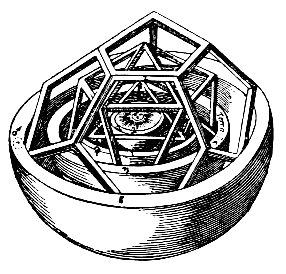
Levels 3–5: The Platonic solids emerge as natural milestones — tetrahedron, octahedron, icosahedron — structures of remarkable beauty and symmetry, arising without external design.
Levels 6–11: Increasing coordination, complexity, and interdependence.
Level 12: The stable 12-fold FCC/HCP lattice. Each unit achieves the maximum possible symmetric nearest-neighbor relationships while retaining its individual position. Free energy reaches its minimum. The structure can extend indefinitely without losing coherence.
This ground state has a quality worth naming carefully. It is not "enlightenment" in a mystical sense — a crystal achieves Level 12 without awareness or experience. But for a system that does have awareness — a conscious being capable of recognising the rule and choosing to walk it — Level 12 coordination represents something: the state in which individuality and deep mutual connection are not in tension but are simultaneously fulfilled.
Meaning Reframed
Through the Ffellonic lens, several fundamental human experiences can be reframed — not defined once and for all, but understood differently:
Love can be understood as the drive toward deep, symmetric, mutually stabilising attachment — connection that reduces free energy for both parties rather than increasing it for one at the expense of the other.
Purpose can be understood as the orientation toward higher coordination — the pull toward richer, more integrated relational structures.
Suffering is often, though not always, associated with unresolved relational tension — asymmetric bonds, isolation, or configurations that cannot settle. This is a reframing, not a definition: not all suffering is relational in origin, and the framework does not claim otherwise.
Consciousness, in this view, is the capacity to become aware of the developmental rule and to participate in it deliberately rather than merely being subject to it.
These are philosophical reframings, not scientific claims. They offer a way of looking at experience that may be illuminating without demanding to be the only true account.
On Cosmic Orientation
One claim requires careful handling. It is tempting to say that "the cosmos itself is oriented toward Level 12" — that reality has a built-in directional pull toward maximal relational harmony. This is poetically compelling but thermodynamically inaccurate in its strong form: the universe as a whole tends toward increasing entropy, not toward ordered structures. Local order arises through free energy dissipation, and Ffellonics describes the geometry of that local order; it does not describe a cosmic teleology.
What can honestly be said is this: wherever the conditions for Ffellonic self-assembly are present — wherever identical units interact under the local rule — the trajectory toward Level 12 is implicit in the dynamics. Within those conditions, the movement toward maximal relational harmony is lawful and reliable. That is a significant and beautiful claim without needing to be a claim about the cosmos as a whole.
Living Ffellonically: A Practical Philosophy
These principles can be translated into daily life — not as rules unique to Ffellonics, since many philosophical and wisdom traditions arrive at similar guidance, but as the same principles grounded in geometric and thermodynamic reasoning:
Make clean first contacts. Approach new people, ideas, and experiences with genuine presence. The quality of the first bond shapes what can be built.
Minimise unnecessary tension. Reduce unresolved asymmetry in your mind, body, and relationships. Simplify, forgive, clarify. Not all tension is avoidable, but much of it is self-generated.
Seek symmetric coordination. Build relationships based on mutual benefit and reciprocity rather than dominance or dependency. The most stable bonds are those where both parties are supported.
Cultivate individuality within interdependence. The Level 12 insight: full selfhood and deep connection are not opposites. The most coherent structures are those where each unit is most fully itself because of its relations, not despite them.
Extend outward once local harmony is achieved. Once internal relational order is established, the natural next move is lateral extension — contributing to families, communities, and larger structures that can carry the same pattern.
The daily decision-making question this framework suggests: Which choice reduces unnecessary tension while increasing symmetric, mutually supportive connection?
Conclusion
Ffellonics does not claim to be the final word on the meaning of life — a claim that philosophy has wisely learned to treat with suspicion. It offers something more useful: a coherent relational account of meaning, grounded in physical geometry, that places connection rather than isolation at the centre of what makes existence worthwhile.
The meaning that Ffellonics points toward is not invented against a meaningless backdrop, nor handed down from beyond. It emerges — as all genuine things emerge — from the lawful, spontaneous movement of relations toward greater harmony, coordination, and mutual support.
To touch. To coordinate. To extend. These are not merely physical processes. For a being capable of awareness, they are the shape of a life well lived — one conscious, symmetric attachment at a time.
Comments
No comments yet. Be the first to share your thoughts.